Local · Denver Today
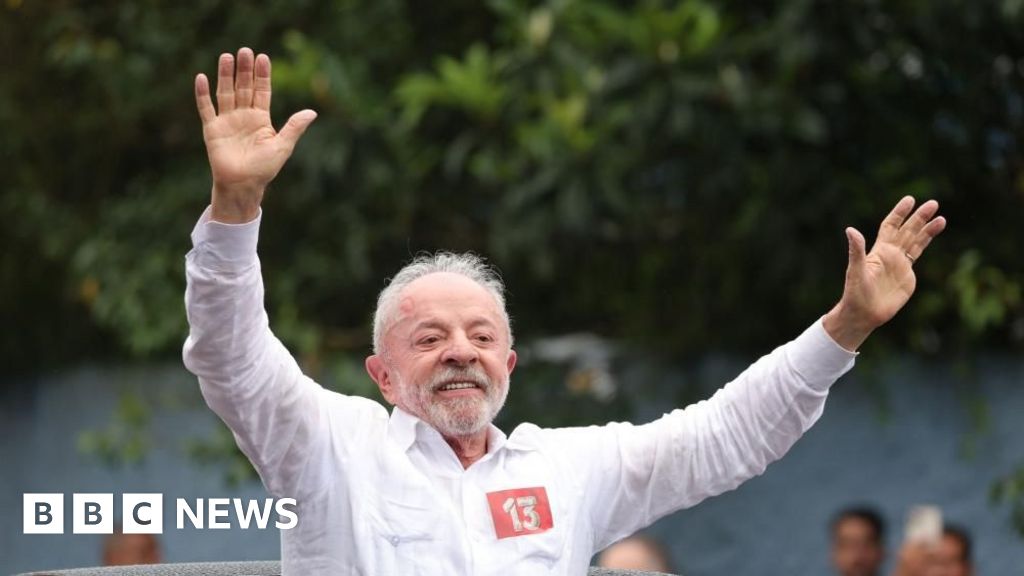
Lula wins fourth term in Brazil but faces hostile Congress and divided country 39 minutes ago Marina Rossi, BBC News Brasil in São Paulo, Leandro Prazeres, BBC News Brasil in Brasília and Vanessa Buschschlüter, Latin America online editor reporting from London EPA/Shutterstock Lula has now won four presidential elections Brazil's veteran left-wing president, Luiz Inácio Lula da Silva, has been re-elected after a bitterly fought campaign, beating his right-wing rival Flávio Bolsonaro. It is Lula's fourth win in a presidential election, having served two terms as president from January 2003 to December 2010, and again from January 2023. But the road to his win in Sunday's run-off was not a smooth one.
Bolsonaro had beaten Lula in the first round on 4 October and many had not thought it possible for him to turn the result around in just three weeks. He has also bucked a wider trend in Latin America, where voters have punished incumbents and turned to the right. Across the region, larger countries such as Argentina, Chile and Colombia all now have conservative leaders at their helm.
EPA/ Shutterstock Lula greets supporters after casting his ballot on Sunday Lula's campaign sprang back to life following his first-round defeat driven by street demonstrations and a massive social media push. The former metalworker, who has been the dominant figure on Brazil's left since he first ran for president in 1989, nevertheless faces the most challenging political landscape since first taking office in 2003. His new term, set to begin on 5 January 2027, will start amid significant constraints at home and abroad, including animosity from US President Donald Trump.
While Trump did not endorse Lula's rival, Flávio Bolsonaro, directly – something he did with the right-wing candidates who went on to win presidential elections held in Colombia and Honduras – there is little doubt his administration would have preferred to see a conservative at the helm of this country of 213 million people. The White House regards Latin America as an area of US influence with the Trump administration keen to have leaders in power who support its policies, including on defence, security and trade. It is also keen to reduce China's influence in the Western Hemisphere.
Brazil, which is oil-rich and holds the world's second-largest reserves of rare earth minerals, is the only big country in South America not governed by a right-wing leader, with Lula largely seen as China-friendly. Flávio Bolsonaro had promised to align Brazil more closely with Washington while Lula had warned the US not to interfere in the election and insisted that Brazil would "never fit into anyone's backyard". But while there may be disappointment in the White House, Lula's victory will be welcomed by environmentalists who had feared that a win by Bolsonaro would have given Brazil's influential agribusiness and mining sectors more power.
They had pointed to record levels of deforestation and forest fires in the Amazon during the presidency of his father, Jair, arguing that under the younger Bolsonaro laxer environmental policies could again lead to destruction in this key ecosystem. Reuters An aerial view from a Greenpeace flyover shows a fire burning in the Amazon rainforest during the UN Climate Change Conference (COP30), held near Centro Novo in the state of Maranhao, Brazil, in 2025 While Lula's supporters are ecstatic about his victory, the result shows that the country remains deeply divided, with more than 48% of voters choosing Bolsonaro. In addition to the challenge of uniting such a deeply polarised country, Lula will have to govern alongside the most right-wing Congress in Brazil's democratic era.
Bolsonaro's Liberal Party (PL) was the party that made the biggest gains in the election. And yet, Lula's Workers' Party managed to organise huge rallies ahead of the run-off, showing the strong grassroots support it commands. Before the election, Lula had described the poll as "a parting of the waters for Brazil".
He promised to bridge the gap between Brazil's opposing political poles with "a new way of governing", adding in a WhatsApp livestream before the election that "this country will never be the same again". While he provided little detail as to what the new way of governing would entail, he insisted he would "remain firm in the fight for a more just country, with opportunities for all and policies directed at the needs of the population". With a largely hostile Congress, this fight just may prove much harder for the veteran leadern - who will be 85 by the end of his fourth term - than in his three previous terms in office.
Source: BBC